Can I take out 100k from bank?
Federal law allows you to withdraw as much cash as you want from your bank accounts. It's your money, after all. Take out more than a certain amount, however, and the bank must report the withdrawal to the Internal Revenue Service, which might come around to inquire about why you need all that cash.
How much money can you withdraw from a bank?
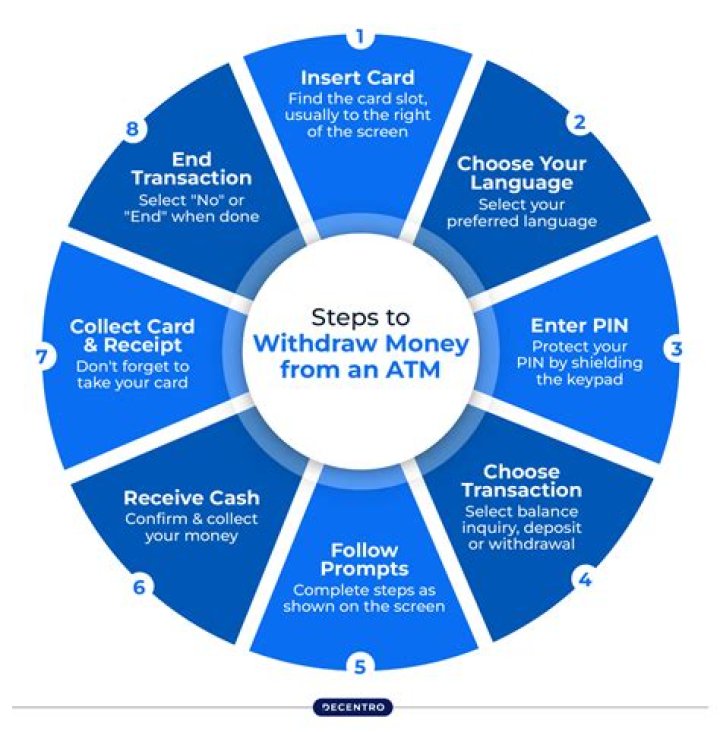
Your ATM max withdrawal limit depends on who you bank with, as each bank or credit union establishes its own policies. But, generally, ATM cash withdrawal limits range from $300 to $1,000 per day. Again, this is determined by the bank or credit union; there is no standard daily ATM withdrawal limit.
How much money can you withdraw from a bank teller?
Tips. Although there is no specific limit to the amount of cash you can withdrawal when visiting a bank teller, the bank only has so much money in its vault. Additionally, any transactions over $10,000 are reported to the government.
What happens when you withdraw $10000 from your bank account?
Failure to report large cash transactions can often trigger federal investigations, leading to fines or even lengthy prison sentences. It all stems from U.S. law that requires forms to be submitted—both by financial institutions, as well as bank customers—each time a cash transaction in excess of $10,000 occurs.
How do I withdraw large amounts of cash?
Can you withdraw 50000 from bank?
There is no cash withdrawal limit and you can withdrawal as much money as you need from your bank account at any time, but there are some regulations in place for amounts over $10,000. For larger withdrawals, you must prove your identity and show that the cash is for a legal purpose.
How much cash can I withdraw from a bank before red flag?
Withdrawals of $10,000
More broadly, the BSA requires banks to report any suspicious activity, so making a withdrawal of $9,999 might raise some red flags as being clearly designed to duck under the $10,000 threshold. So might a series of cash withdrawals over consecutive days that exceed $10,000 in total.
How much can I take out of the bank at one time?
Most financial institutions have a daily ATM withdrawal limit of $300 to $3,000. If you need to withdraw more money from your account, get cash back from a store or visit a branch. Read about what you can expect to pay in bank ATM fees on Insider.
Can a bank deny you access to your money?
Yes. A bank must send you an adverse action notice (sometimes referred to as a credit denial notice) if it takes an action that negatively affects a loan that you already have. For example, the bank must send you an adverse action notice if it reduces your credit card limit.
Why do banks ask why you are withdrawing money?
It's mainly for security purposes. The big reason is: Under the Bank Secrecy Act (BSA), the government wants to make sure you're not exploiting your bank to fund terrorism or launder money, or that the money you're depositing isn't stolen.
Can I withdraw all my money from the bank?
Can I Withdraw All the Money in My Account? Yes, you can withdraw everything in your account from your bank. But if you want your account to stay open, some banks have minimum balances, such as $25 or more, that must remain in the account to keep it from closing and to pay fees.
Do banks report cash withdrawals?
Also, under federal law, banks are required to report any transactions of cash which total more than $10,000 in any single day: This information is included on a currency transaction report (CTR) and is used to help the government track large transactions and prevent money laundering.
What can I do with large amounts of cash?
Here are 11 ideas to make the most of a lump sum:
- Free your income. ...
- Create cash flow. ...
- Put a down payment on a property. ...
- Save for long-term growth. ...
- Increase your net worth. ...
- Start a business. ...
- Take care of business. ...
- Make a difference.
What happens if you withdraw more than 10000?
Federal law requires a person to report cash transactions of more than $10,000 by filing IRS Form 8300PDF, Report of Cash Payments Over $10,000 Received in a Trade or Business.
Do banks notify IRS of large withdrawals?
Financial institutions are required to report cash withdrawals in excess of $10,000 to the Internal Revenue Service. Generally, your bank does not notify the IRS when you make a withdrawal of less than $10,000.
What is the largest check a bank will cash?
Banks don't place restrictions on how large of a check you can cash. However, it's helpful to call ahead to ensure the bank will have enough cash on hand to endorse it. In addition, banks are required to report transactions over $10,000 to the Internal Revenue Service.
Does the government check your bank account?
The Short Answer: Yes. The IRS probably already knows about many of your financial accounts, and the IRS can get information on how much is there. But, in reality, the IRS rarely digs deeper into your bank and financial accounts unless you're being audited or the IRS is collecting back taxes from you.
How much cash does a bank usually have on hand?
Banks tend to keep only enough cash in the vault to meet their anticipated transaction needs. Very small banks may only keep $50,000 or less on hand, while larger banks might keep as much as $200,000 or more available for transactions. This surprises many people who assume bank vaults are always full of cash.
How can I withdraw more than 10000 from my bank?
If you're a frequent and well-known customer at your bank, they may allow you to withdraw cash without providing identification. The law forbids this on large withdrawals, however. Even if your teller knows you by name, she must ask you for identification if you withdraw $10,000 or more.
Is 100k in the bank good?
In fact, a good 51% of Americans say $100,000 is the savings amount needed to be financially healthy, according to the 2022 Personal Capital Wealth and Wellness Index.
Is 100k a lot of money?
Some call them HENRYs, short for “high earners, not rich yet.” Usually in their 20s and 30s, these young people make more than $100,000 a year. The median household income in the U.S. is about $70,000 a year, according to 2019 census data.
How much cash can you keep at home legally?
There's no legal limit on how much money you can keep at home. Some limits exist with bringing money into the country and in the form of cash gifts, but there's no regulation on how much you can keep at home.
What amount triggers a suspicious activity report?
Under federal rules, banks and financial institutions are required to file an SAR any time they flag a transaction of at least $5,000 as suspicious.
What is a suspicious amount of cash?
The $10,000 Rule
Ever wondered how much cash deposit is suspicious? The Rule, as created by the Bank Secrecy Act, declares that any individual or business receiving more than $10 000 in a single or multiple cash transactions is legally obligated to report this to the Internal Revenue Service (IRS).
How do banks detect suspicious activity?
The bank runs rules-based algorithms against transaction systems to generate alerts. The algorithms look for anomalous behavior — e.g. a large volume of cash transactions; large transfers to a country where the customer does not do business.)